

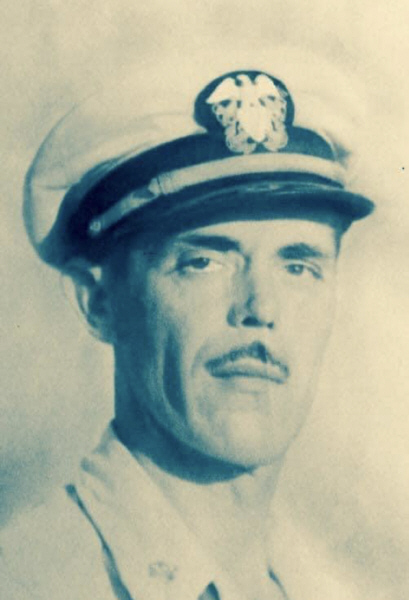
I, Edwin Green began smoking Lucky Strike cigarettes in 1924-25 andcontinued smoking them, at the rate of one to three packs per day until1956 when my physician advised me that I had contracted cancer of the left lung. By the time of diagnosis the cancer had already spread or metastasized to the 6 lymph glands outside my lungs and was no longer operable or curable. Amello- rating treatment was given, but the cancer proceeded on its typical, fatal course and terminated with my death on February 25, 1958. I was treated by two of Miami's outstanding medical physicians, DeWitt C. Daughtry,M.D., a senior thoracic surgeon,and Charles F. Tate, M.D, an internist who specializes in chest diseases and is a full-time faculty member of the University of Miami Medical School. Both of these treating doctors testified that I had a typical primary cancer of the left lung, that I died from this cancer, and that the cancer was caused by the smoking of cigarettes.
About me, I was born in Florida and lived all of my life in Florida except for my Navy service during World War II. I enjoyed normal good health until V-J Day in 1945 when I was involved in a serious accident on Guam. Although this accident left me with permanent injuries to my legs, it did not affect my life expectancy and was not related to the cancer which caused my death. After the war I returned to the construction business in which I had started and ran until early 1956. I died at age forty-nine. I left behind my widow, Mary Green, and my beautiful three children, my strong and compassionate son Edwin Green,Jr. age 23, my beautiful daughter, Patricia Lee, age 9; and my little angel daughter Catherine Ann, age 1½. I am so proud of all of you and I miss you so much. During the thirty or more years that I smoked, I regularly smoked Lucky Strike cigarettes, except on the few occasions when this brand was not available. I inhaled the smoke into my throat and lungs. I did not ever have either cigarettes or cigarette smoke analyzed, did not know the composition of cigarette smoke, and assumed that smoking cigarettes was not harmful (no warning labels). I would not willingly have smoked Lucky Strikes if I had known that the cigarette smoke contained arsenic or other cancer producing ingredients. The long nine years of litigation that my brother Clinton Green and my attorney Lawrence Hastings fought so tirelessly for never produced one penny for my family. My case has been before two juries, the Supreme Court of Florida, and the United States Supreme Court and was the first jury inthe world to agree that the cigarettes (Lucky Strikes) that I smoked caused my death. But no jury has ever decided on the question of damages from my death because no jury has ever been properly instructed to deliberate on the implied-warranty-liability law. My son Ed, wife Mary along side my brother Clinton Green and attorney Lawrence Hastings (plaintiffs) came to court one last time seeking a new trial on damages only or a full new trial. The judge did not allow it and new trial has never been granted.
This statement is now accepted by the world as fact. Edwin M. Green's case, which stretched over 12 long years in the 1960's, convinced one jury of this fact but could not convince the supreme court of the United States to hold the American Tobacco company liable for selling an unsafe product for human consumption. The famous case, Green Vs. American Tobacco Company was the first case in history where a jury found a tobacco company responsible for the death of an individual.
History of Green vs. American Tobacco Company:
The diversity-jurisdiction litigation evolved in these appeals began in December, 1957, when Florida citizen Edwin Green, Sr., filed his complaint in the U. S. District Court for the Southern District of Florida, against the American Tobacco Company, a New Jersey corporation, claiming damages for personal injuries resulting from the incurrence of lung cancer from the consumption of defendant's product, Lucky Strike cigarettes.
Pending suit, plaintiff Edwin Green, died on February 25, 1958, and his Administrator, Edwin Green, Jr., was substituted as party plaintiff. Thereafter the decedent's widow, Mary Green, filed a companion suit in the Federal Court under the Florida Wrongful Death Statute. The two appeared for jury trial upon the plaintiffs' first amended complaint which asserted six separate counts of liability:
(1) Breach of Implied Warranty;
(2) Breach of Express Warranty;
(3) Negligence;
(4) Misrepresentation;
(5) Battery; and
(6) Violation of the Federal Food, Drug and Cosmetic Act, the Federal Trade Commission Act, and the Florida Food, Drug and Cosmetic Act.
At the conclusion of plaintiffs' case, the trial Judge directed a verdict in favor of defendant as to all counts except:
(1) Breach of Implied Warranty and
(3) Negligence
(1) that plaintiffs' decedent had a primary cancer of the left lung;
(2) that this cancer was the cause or one of the causes of his death;
(3) that the smoking of Lucky Strike cigarettes was a proximate cause of the lung cancer; and
4) that the defendant tobacco company could not have known by February 1, 1956, (the date of diagnosis/ by the reasonable application of human skill and foresight that the users of Lucky Strike cigarettes would be endangered of contracting cancer of the lung.
A general verdict in favor of the defendant accompanied these findings. Final judgments in both cases were thereupon entered for defendant.
Both plaintiffs filed identical post-trial motions entitled, "Motion To Set Aside Judgment And General Verdict For The Defendant And To Enter Judgment For Plaintiff In Accordance With The Answers To Special Interrogatories Numbers 1, 2, and 3, Notwithstanding The General Verdict For Defendant, And To Order A New Trial On The Issues Of Damages Only, Under Rule 49 Of The Federal Rules Of Civil Procedure." as well as Motions For New Trial.
All of these post-trial motions were denied.
After the final judgments in its favor were rendered, the defendant tobacco company filed its Bill of Costs requesting that the sum of $6,301.82 be taxed as costs against the plaintiffs.
After correction, this request came on for hearing on the plaintiffs' objections thereto. Upon bearing, the District Court entered its Cost Judgment against the plaintiffs in the total amount of $1,969.74. Of this amount, some $900.00 was for expert witness fees assessed at the rate of $163.00 per expert witness. Plaintiffs have likewise appealed from the entry of these costs judgments. The appeals from the two judgments on the merits and from the cost judgments were ordered consolidated by the District Court.
Three Questions Presented:
(1) Under the Florida doctrine of implied warranty are not the plaintiffs entitled to judgment as a matter of law, as requested in their post-trial motions under 49 (b), based upon the jury's special findings that the smoking of defendant's Lucky Strike cigarettes proximately caused the plaintiffs' decedent to contract a fatal case of cancer of the lung?
(2) Did not the trial Judge err in refusing to grant plaintiffs requested charges on the issue of implied warranty and in charging instead that the implied warranty of fitness which a manufacturer under Florida law is held to make depends upon the ability of the manufacturer to know about the harmful substances in its product?
(3) Did not the trial Judge err in taxing as costs against the plaintiffs a total of nine expert witness fees in the amount of $100.00 per expert, such sums being beyond the amount allowable and authorized by Federal statute?
The great mass of testimony and evidence at the trial concerned basically two factual issues:
(1) Was Edwin Green's death caused by a primary cancer of the lung, that is, a cancer originating in the lung?
(2) Do cigarettes cause lung cancer? Or specifically, was the cancer in Edwin Green's lung caused by his consumption of defendant's product, Lucky Strike cigarettes?
The trial was devoted principally to the presentation of expert medical testimony. On these issues the plaintiffs presented the testimony of eight medical doctors. Their evidence conclusively supports the jury's findings that the smoking of Lucky Strike cigarettes caused Edwin Green to incur a fatal lung cancer due to specific harmful ingredients or carcinogens contained in the cigarettes and cigarette smoke. Plaintiffs' evidence in this regard can be briefly described and summarized:
Carcinogens in Cigarettes.
By answers to interrogatories the defendant American Tobacco Company admitted that,
"it would appear that polycyclic aromatic hydrocarbons are present" in the mainstream smoke of Lucky Strike cigarettes.
American Tobacco Company president confirmed that a group of polycyclic hydrocarbons had been detected in Lucky Strike cigarette smoke by spectrophotometric process and American Tobacco's research director disclosed that the American Tobacco Company had unsuccessfully attempted to eliminate or reduce the elements in tobacco which produce these polycyclic aromatic hydrocarbons. Plaintiffs' witness Dr. Wynder testified that certain polycyclic aromatic hydrocarbons had definitely been isolated and identified in cigarette smoke. These polycyclic aromatic hydrocarbons were positively described as being carcinogenic (cancer'-causing).
In addition, the American Tobacco Company's answer to interrogatories showed that the American Tobacco Company since 1927 had been conducting frequent tests showing not only the presence of measurable quantities of arsenic in the mainstream smoke of Lucky Strikes, but also showing that from 1927 to 1951 the amount of arsenic in Lucky Strikes and in the mainstream smoke of Lucky Strikes regularly increased year by year more than three fold from 11.9 micrograms per cigarette in 1927 to 42.1 micro- grams in 1951, and from .52 micrograms in the mainstream smoke in 1927 to 1.85 micrograms in 1951. Arsenic likewise was positively identified as a known carcinogen.
Plaintiffs' Medical Witness testified as follows:
Dr. Wynder is a professor of medicine at the Sloan-Kettering Institute, a Division of Cornell University. He is the head of the section of epidemiology, and devotes from sixty to seventy per cent of his time to work related to respiratory tract cancer. He has published thirty papers with respect to the effect of smoking, and supervises the work of 25 specialists on the staff of the Institute. He specializes in cancer patients and has seen approximately 1200 cancer patients.
Dr. Wynder testified that "smoking was a main factor in lung cancer" and that the "risk of a very heavy smoker to develop lung cancer is at least twenty times greater than a non-smoker"; and that "the major cause of epidermoid lung cancer in man is cigarette smoking"; that "the major factor that produces lung cancers in American males is smoking"; and that "we are convinced that smoking is a cause of king cancer". Dr. Wynder identified the chemical elements in cigarette smoke known as higher aromatic polycyclic hydro- carbons as the primary or major cancer-causing agent. He pointed out that 90 per cent of the total smoke solids which are deeply inhaled get retained in the lung, and that a majority of the tobacco smoke condensate gets condensed in the bronchi. According to his studies, 98.5% of lung cancer cases occur among smokers; women who get lung cancer smoke more; and that in a study of Seventh Day Adventists (a non-smoking sect) only two cases of epidermoid lung cancer were found and these turned out to be heavy smokers before joining the church.
Dr. DeWitt C. Daughtry:
Dr. Daughtry is the senior member of a team of physicians in Miami specializing in thoracic (or chest) surgery. He is a professor of surgery at the University of Miami Medical School; was elected president of the Southern Chapter of the American College of Chest Physicians; be- longs to numerous professional societies. He has performed 4,000 to 5,000 chest operations, and has seen approximately 2,000 cases of cancer of the lungs. He is the chief or chairman of thoracic surgery at two of Miami's largest hospitals. Dr. Daughtry testified that he personally examined and treated Edwin Green for his lung cancer; that Mr. Green had a typical case of primary cancer of the lung which had progressed beyond any hope of a cure; that the diagnosis was "very clear to us"; that there was no question in his mind because "it had the absolute characteristic appearance from the beginning, we had our proof of diagnosis, and it followed a typical course, unfortunately"; that the cancer was primary to the lungs; that is, it started in the lungs; and that cancer of the lung was the basic cause of death. Dr. Daughtry further testified that Edwin Green's lung cancer was caused by his heavy smoking; that arsenic is a carcinogen and a cause of lung cancer; that arsenic has an irritative, accumulative effect and is a factor in the production of cancer of the lung; and that the higher aromatic polycyclics in cigarette tar are carcinogenic.
THE IRONY
Surgeon General’s Report on Smoking
1964 - Institutional Event
In 1964, 46 percent of all Americans smoked. They did it in offices, airplanes, elevators and hospitals. Cigarette commercials filled TV airwaves. Even cartoon programs were sponsored by cigarette brands.
So when Surgeon General Luther L. Terry issued the report of his special commission on smoking in January 1964, it was front page news. For the first time, Smoking and Health: Report of the Advisory Committee to the Surgeon General emphatically linked smoking to lung cancer and other diseases.
To many people, the findings were not entirely surprising. Evidence of smoking as a cause of lung cancer had surfaced much earlier. For that reason, a national commission was requested in 1961 by an alliance of the American Cancer Society, the American Heart Association, the National Tuberculosis Association and the American Public Health Association.
Message from Kathleen Sebelius
Secretary of Health and Human Services
Tobacco use imposes enormous public health and fnancial costs on this nation —costs that are completely avoidable. Until we end tobacco use, more people will become addicted, more people will become sick, more families will be devastated by the loss of loved ones, and the nation will continue to incur damaging medical and lost productivity costs. Now is the time to fully implement proven and effective interventions that reduce tobacco-caused death and disease and to help end this public health epidemic once and for all.
Cigarettes are responsible for approximately 443,000 deaths—one in every fve deaths—each year in the United States. The chronic diseases caused by tobacco use lead the causes of death and disability in the United States and unnecessarily strain our health care system. The economic burden of cigarette use includes more than $193 billion annually in health care costs and loss of productivity.
We can prevent the staggering toll that tobacco takes on individuals, families, and communities. This new Surgeon General’s report focuses on cigarettes and cigarette smoke to provide further evidence on how cigarettes cause addiction and premature death. It identifes better approaches to helping people stop smoking and brings to light new ideas for how to lower the incidence of smoking-caused disease.
Twenty years of successful state efforts show that the more states invest in tobacco control programs, the greater the reductions in smoking, and the longer states maintain such programs, the greater and faster the impact. The largest impacts come when we increase tobacco prices, ban smoking in public places, offer affordable and accessible cessation treatments and services, and combine media campaigns with other initiatives. We have outlined a level of state investment in comprehensive tobacco control and prevention efforts that, if implemented, would result in an estimated fve million fewer smokers over the next fve years. Hundreds of thousands of premature deaths caused by tobacco use could be prevented, and many fewer of the nations’ children would be deprived by premature death of their aunts, uncles, parents, and grandparents. Importantly, in 2009 the U.S. Food and Drug Administration received statutory authority to regulate tobacco products. This has the potential to lead to even greater progress in reducing morbidity and mortality from tobacco use.
Tobacco prevention and control efforts need to be commensurate with the harm caused by tobacco use. Otherwise, tobacco use will remain the largest cause of preventable illness and death in our nation for decades to come. When we help Americans quit tobacco use and prevent our youth from ever starting, we all beneft. Now is the time for comprehensive public health and regulatory approaches to tobacco control. We have the knowledge and tools to largely eliminate tobacco caused disease. If we seize this moment, we will make a difference in all of our communities and in the lives of generations to come.
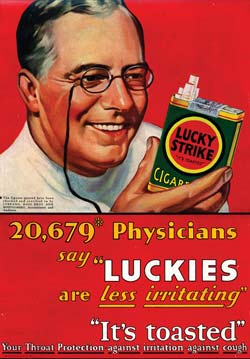
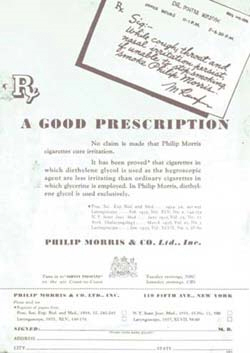
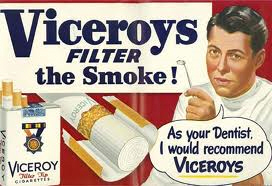
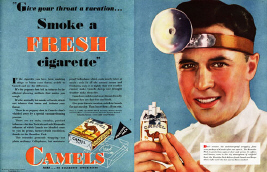
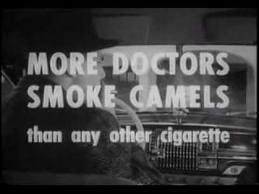
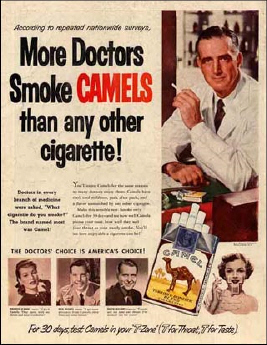

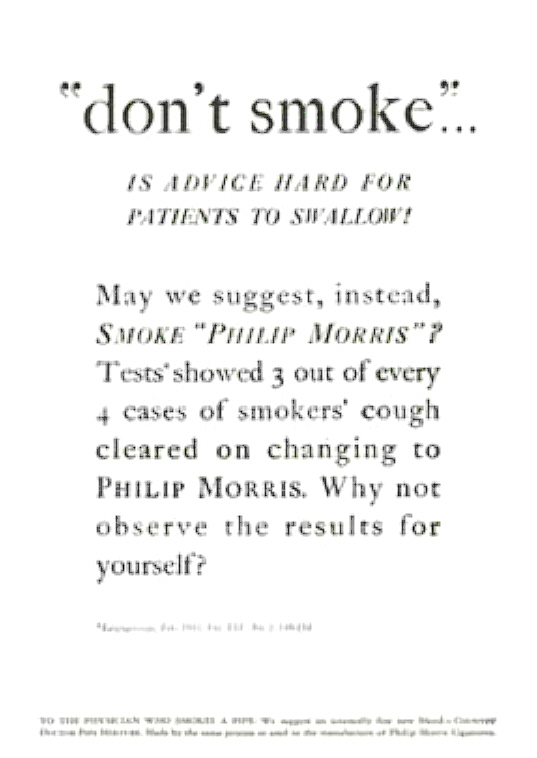
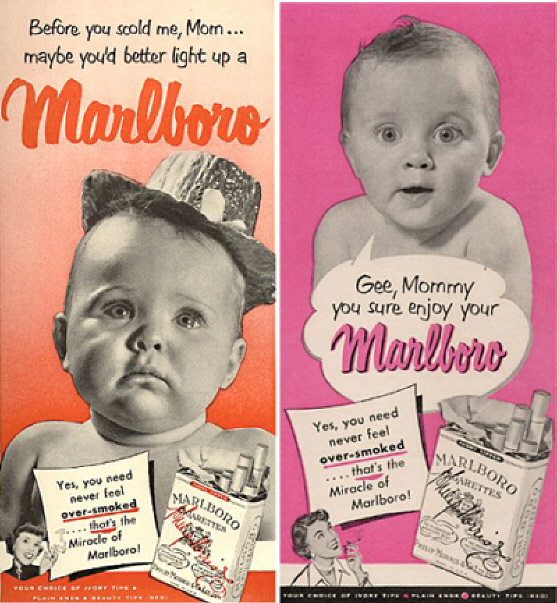
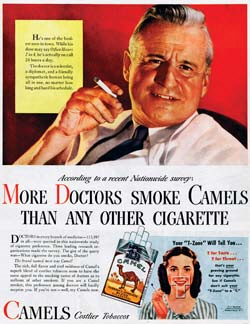
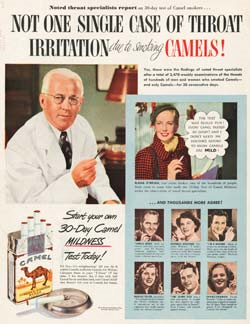
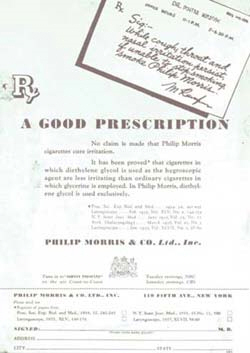
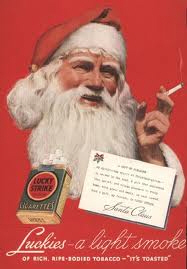
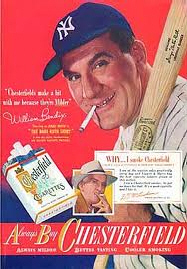
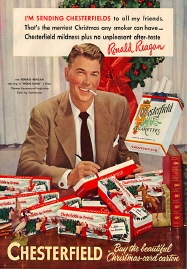
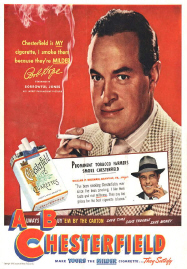
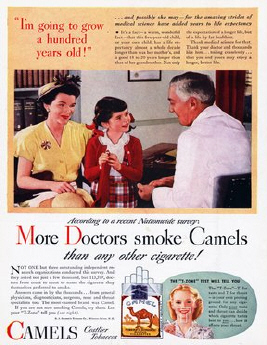
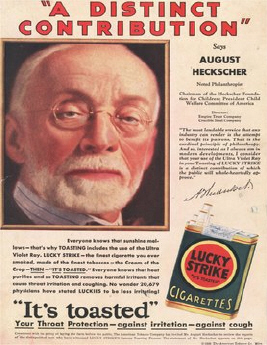
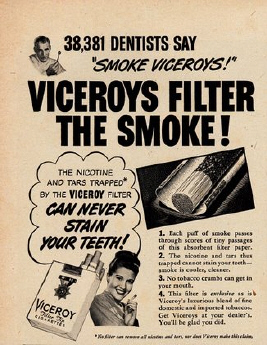
Why use Doctors in Cigarette Comercials? Were they implying something?

American Tobacco Company Using Subliminal Messages When
They Knew It Caused Cancer.
Soon after my case was denied a new trial, because of my death, the Surgeon General ordered warning labels that read: Cigarette smoking may be hazardous to your health -- to be placed on ALL cigarette packages in the United States. They knew they were wrong.
My grandson Christopher Green on March 2011,over 53 years after my death just "Googled" tobacco law suits and found a woman who was just awarded 8 million dollars, from the 130 million dollars she was seeking, on the wrongful death suit she filed after her husbands death regarding the smoking of cigarettes (after warning labels were placed on cigarettes). The title read, "WIDOW, AN UNSUNG HERO" and "SMOKERS WIDOW." I am glad to finally see justice in an unjust world. All the money in the world could not bring back the life that I lost but the money could have helped my widow, son and two small daughters too.
When quitting cigarettes, save money and switch to blu cigs coupons at Webbyplanet.com for a safer smokeless tobacco-free alternative.
Terry’s 10-man commission met in late 1962. After 14 months of studying 7,000 articles with more than 150 consultants, the commission reported that average smokers had a nine- to tenfold risk of developing lung cancer compared to nonsmokers. Heavy smokers had at least a twenty-fold risk. The report also implicated smoking as a cause of chronic bronchitis, emphysema and heart disease.
Following the release of the report, Congress required all cigarette packages to carry health warnings. They also banned all broadcast cigarette advertising, beginning in 1970.
All thanks to EDWIN M GREEN SR. THE TRUE UNSUNG HERO
Information provided by BCBSNC.

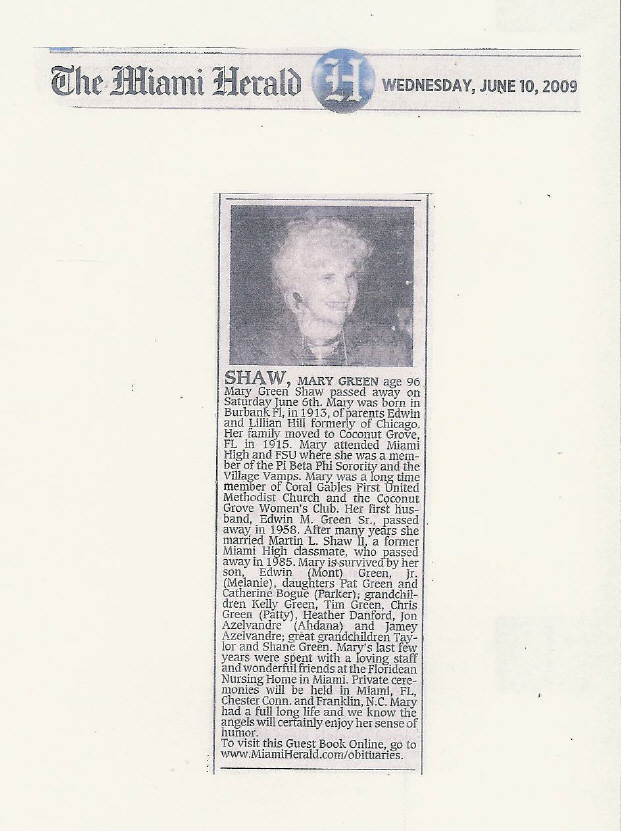
"My 96 year old Grandmother Mary, (Widow of Edwin Green Sr.) told me that one of the Doctors for the defendant, American Tobacco Company, approached after the last court hearing and apologized for what he had done".
Common Adverse Effects of Tobacco Smoking
SEE INSIDE THE BODY HERE
The very first study showing that smoking was linked to lung cancer was conducted in 1912 by American Dr. Isaac Adler who used a monograph to demonstrate the link. As early as 1928 there were studies in Germany also purporting to demonstrate a link, although the first formal statistical evidence was in 1929 by Fritz Lickint of Dresden.


View nine new warning labels cigarette makers will have to use by the fall of 2012. In the most significant change to U.S. cigarette packs in 25 years, the FDA's the new warning labels depict in graphic detail the negative health effects of tobacco use.
Powered by AnestaWeb, Inc.
Real People. Real Information.
®
by Christopher Green Grandson of Edwin Green Sr.





GREEN SR
I, Edwin Green began smoking Lucky Strike cigarettes in 1924-25 andcontinued smoking them, at the rate of one to three packs per day until1956 when my physician advised me that I had contracted cancer of the left lung. By the time of diagnosis the cancer had already spread or metastasized to the 6 lymph glands outside my lungs and was no longer operable or curable. Amello- rating treatment was given, but the cancer proceeded on its typical, fatal course and terminated with my death on February 25, 1958. I was treated by two of Miami's outstanding medical physicians, DeWitt C. Daughtry,M.D., a senior thoracic surgeon,and Charles F. Tate, M.D, an internist who specializes in chest diseases and is a full-time faculty member of the University of Miami Medical School. Both of these treating doctors testified that I had a typical primary cancer of the left lung, that I died from this cancer, and that the cancer was caused by the smoking of cigarettes.